Building a multicultural working life in North Savo

Johanna Pantsar of Bestla Consulting, Paco Nucci of Elettra Oy, and Janne Rautula of Lapp Finland share their experiences of how recruiting and integrating employees with foreign backgrounds can increase productivity, commitment, and a sense of community in the workplace.
There are many companies and experts operating in North Savo who promote the region’s international outlook and help skilled professionals put down roots in Finland. Their experiences and good practices are valuable for anyone looking to develop international recruitment and a multicultural working life.
Johanna Pantsar advocates for multiculturalism
Johanna Pantsar, entrepreneur at Bestla Consulting Oy, is an HR management expert, coach, and trainer from North Savo. She advocates for multiculturalism and helps organizations in the region internationalize their workforce.
Pantsar has recruited professionals from 46 different countries to Kuopio and has played a key role in transforming one of the region’s leading companies into Kuopio’s most multicultural workplace.
“I consult and train people on international recruitment and help with insurance and payroll issues. I also help tackle misunderstandings and communication challenges arising from cultural differences,” Pantsar explains.
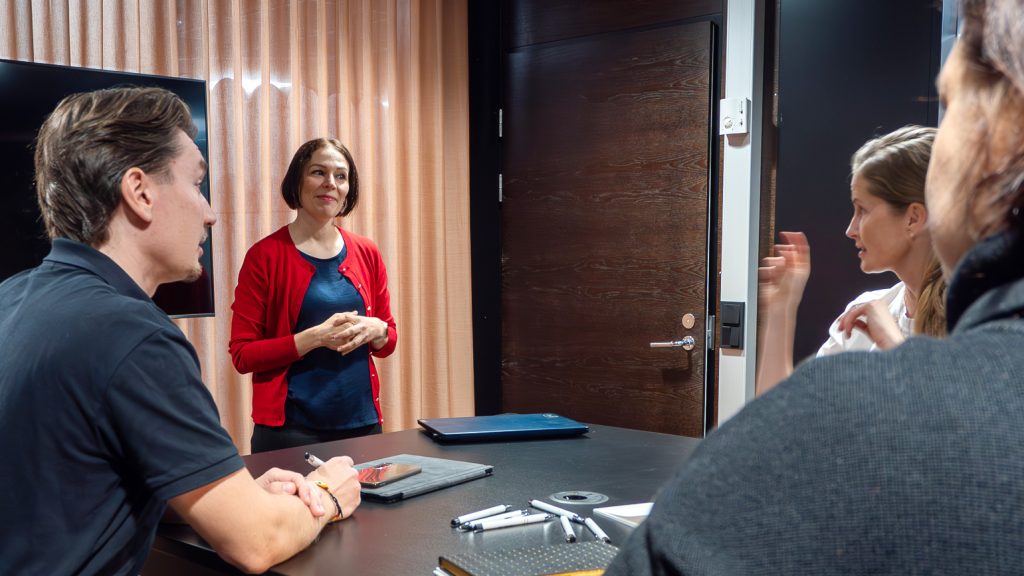
In her current role at Bestla Consulting, Pantsar supports companies in recruiting international talent and managing relocations. She also coaches multicultural work communities to strengthen shared understanding and provides concrete solutions to support leadership and HR.
Active and courageous networking is key
According to Pantsar, diversity brings efficiency, productivity, and increased innovation to organizations. It also improves employer branding and increases employee satisfaction and commitment.
She reminds us that as Finns, we can never fully know what it is like for someone from abroad to work in Finland, look for a job, or live here in general. One should not make assumptions but instead ask questions and involve international employees in company operations and planning.
“It frustrates me to see working groups and projects that focus on international talent and their employment, but where not a single person from the target group has been hired,” Pantsar says.
She advises international professionals not to give up, even if they start at a disadvantage. Active and courageous networking is essential.
Diversity is an opportunity
According to Pantsar, recruiting a person with a foreign background should be approached differently than recruiting Finns who have grown up within Finnish society. In onboarding and interviews, it is important to step outside one’s own bubble and understand things that newcomers cannot yet know—and to articulate those things clearly.
“Pay attention to your own prejudices and try to see beyond them. Finns tend to see other Finns as individuals, but foreigners through stereotypes. Consider what opportunities a person can bring who sees things through completely different lenses,” Pantsar advises.
Diversity is an opportunity, even though many organizations perceive it as a risk. Companies can start small. Cooperation with educational institutions can open doors to future talent with a low threshold, for example by offering internships or thesis opportunities to international students.
Restaurateur Paco Nucci favors a diverse work community
Paco Nucci, who originally moved from Italy to Finland and now runs several restaurants in Kuopio, can personally relate to those who come to Finland from abroad to build their careers. He has been open and given many people opportunities. In Nucci’s company, Elettra Oy, a diverse work community is encouraged; at its peak, employees have come from 18 different countries.

“I’ve been very satisfied with most of our international employees. At the moment, for example, we have workers from the Philippines. Filipinos are calm and reliable professionals. They are also very trustworthy and loyal.”
Nucci estimates that his restaurants are among the most ethnically diverse in Kuopio, as over 75 percent of employees are immigrants. This naturally brings challenges in bringing people together when employees come from different cultures and backgrounds. However, Nucci feels that a diverse work community is beneficial—people are willing to give their all when they are given a chance to work.
“Many Finns who have worked in the restaurant industry for a long time have become tired of the job and are no longer able to give the same level of commitment,” Nucci observes.
Language skills enable a deeper understanding of culture
According to Nucci, immigrants who come from difficult circumstances are not easily shaken by challenging situations. They remain calm even if 300 customers suddenly walk in. An international environment, in turn, motivates Finnish employees. They feel as if they are working abroad, as English is the working language in Nucci’s restaurants.
“Even though using English is a strength in our case, immigrants should still invest more in learning the local language. For example, we have one employee who is trained as a doctor. He certainly wouldn’t be working in a restaurant if he spoke Finnish,” Nucci notes.
Having lived in Finland for 34 years, Nucci himself is a living example of how far one can go in working life in a foreign country by mastering the language. Knowing the language allows for a much deeper understanding of the culture and enables people to move things forward together.
“If you don’t know the language, Finland may remain just a stopover in people’s lives. In that case, educating and supporting these individuals becomes very costly for the Finnish state. Ideally, immigrants would stay here.”
Lapp Finland promotes equality
Lapp Finland has received the Prejudice-Free Pioneer recognition from the Finnish Red Cross, awarded to companies, communities, and individuals who promote equality through their actions. Lapp Finland, which manufactures cables and wiring harnesses for machine and equipment manufacturers, has employed immigrants for years; the longest careers of employees with foreign backgrounds span over 20 years.

“At the moment, ten languages are spoken in our daily work community, and one third of our personnel are immigrants,” says Janne Rautula, Operations Manager at Lapp Finland.
Lapp Finland has systematically developed its onboarding processes to account for different learning styles as well as employees’ cultural backgrounds. The work community has also been built from a responsibility perspective. The company wants immigrants to settle in Upper Savo, so it supports the integration of entire families, for example by helping with matters related to public authorities.
“We feel that people from different backgrounds bring new perspectives and new kinds of expertise,” Rautula says.
Recruitment requires long-term commitment
Lapp Finland began systematically building a multicultural work community in 2012. Even then, the company recognized future challenges in labor availability. Rautula encourages openness and open-mindedness in recruiting people with foreign backgrounds—they should be seen as an opportunity.
“The key to success is continuous training for supervisors and understanding cultural differences. There must also be genuine willingness and commitment to building a functional diverse work community so that employees commit to the workplace. Of course, close cooperation between supervisors and HR is also needed.”
According to Rautula, job seekers with foreign backgrounds must also be courageous. For many, excessive humility is a challenge. He strongly advocates learning Finnish: language skills build trust, even if the working language is English.
Lapp Finland is in the fortunate position of not having to actively market its need for labor; immigrants contact them directly based on recommendations received through their networks. Cooperation with educational institutions and local stakeholders is also essential.
“However, it’s important to remember that there are no quick wins—long-term commitment is also required when recruiting international talent,” Rautula adds.
Read also:
Aileen dared to leap into the unknown
A Dream of snow came true – Indian nurse builds her future in Kuopio
Text: Minna Akiola
Photos: Petra Kuha, Johanna Pantsar, Paco Nucci ja Lapp Finland