Servica responds to changes in working life through diversity

A shortage of skilled workers is a real challenge in many sectors. At the same time, there are people outside the workforce who would be willing and able to work if given the opportunity. At Servica Ltd, this challenge has been addressed through the Diversifying Work Communities project.
Servica is one of the largest employers in North Savo. The company, primarily owned by the Wellbeing Services County of North Savo and the City of Kuopio, provides services such as food, transport, and facility management throughout the region. Of its approximately 1,750 employees, 450 are expected to retire over the next five years. More workers are needed.
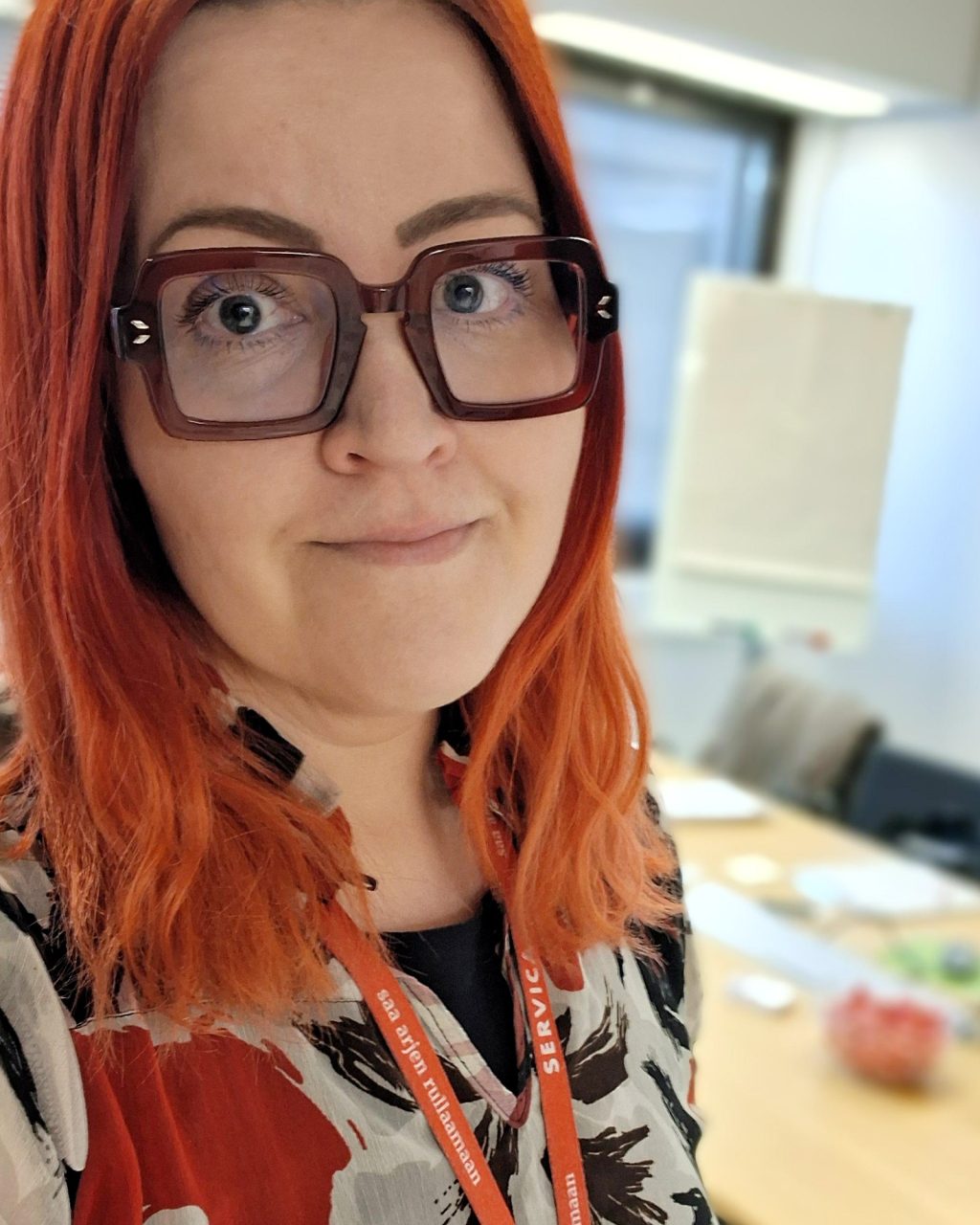
Project Coordinator Anna-Mari Repo has seen firsthand what happens when recruitment is approached in a new way.
“We wanted to think more broadly about where to find employees. In this project, we focus on four groups: neurodivergent individuals, mental health rehabilitees, people with intellectual disabilities, and immigrants with limited language skills,” Repo explains.
One of the key insights of the project has been that the path to employment must be as easy and accessible as possible. At Servica, this has meant low-threshold encounters and individual support from the very first contact.
People can join the project through many different routes: employment services, coaches, or partner networks—or by contacting Servica directly.
“I meet face-to-face with all applicants whose skills, wishes, and situations could genuinely match the opportunities we offer at Servica. If it is already clear at an early stage that we do not have a suitable position available at that moment, we go through the situation openly by phone or email. This ensures that the process is as smooth and clear as possible for the applicant.”
These meetings help form an overall understanding of the person’s situation, skills, and aspirations, which serves as the basis for finding a suitable work environment.
The next step is often a work trial or another form of workplace familiarization. The goal is to find a position that also offers the possibility of employment. Equally important is finding a work community where onboarding, support, and everyday practices align as well as possible with the employee’s needs and strengths.
“The key is to match the right work community and job tasks so that both the employee and the team have the best possible conditions to succeed.”
Repo is often present during the first working days to support both the employee and the work community. This support continues throughout the entire process. It may involve help with onboarding, discussions, or simply being someone to call after the workday.
The language barrier is not insurmountable
For immigrants with limited Finnish language skills, the biggest challenge in working life is often communication. When work ability and competence are otherwise strong, language can be the only barrier to employment.
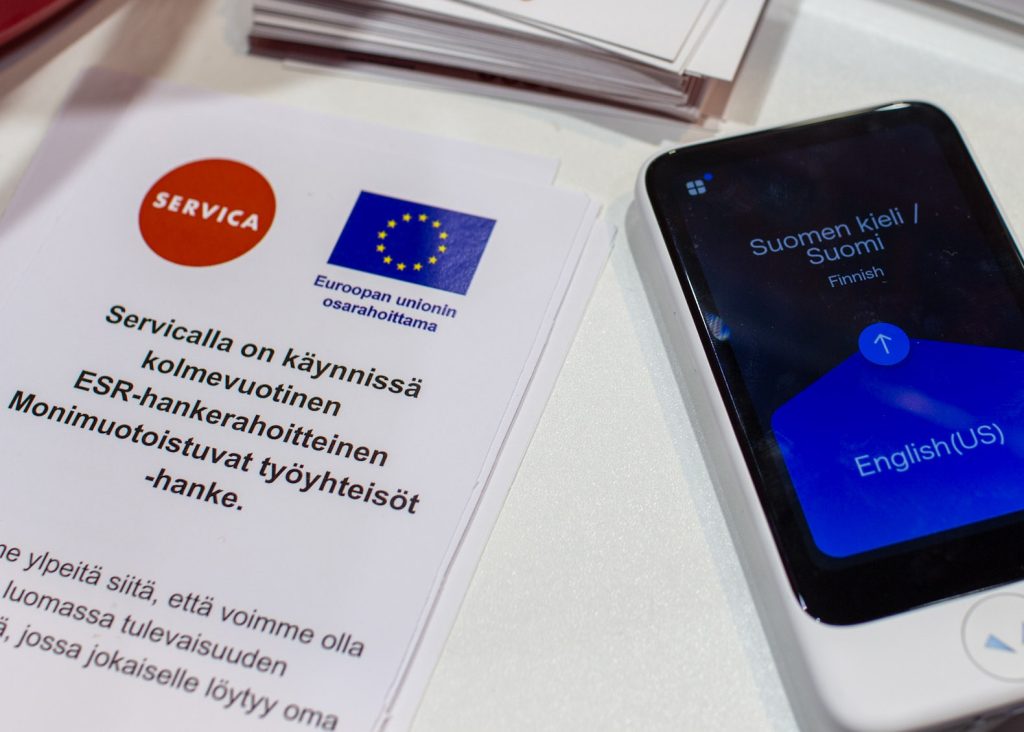
At Servica, practical tools have been developed as a solution. One of them is an easy-to-use, mobile-sized translation device that enables communication in different languages.
“In addition, onboarding has been made more visual and concrete. We use videos, images, and glossaries. Learning happens alongside the work, and vocabulary grows day by day,” Repo says.
Prejudice is the biggest barrier
For people with intellectual disabilities, the biggest challenge in working life is not their ability to work—it is attitudes.
“Many people have a distorted view that if someone has an intellectual disability, they cannot do anything,” Repo says.
In reality, skills vary individually, and with the right onboarding, many perform their tasks excellently. Clarity and repetition are key. Repo also emphasizes tailoring job tasks—not everyone needs to do everything.
“We must remember that not all of us need to be multitaskers. There may be a specific task that they do perfectly. Once the right task is found, the employee can be extremely valuable to the work community.”
Neurodivergent individuals, such as those on the autism spectrum or with ADHD, often have specialized skills that can easily go unnoticed. Challenges may include social load or noisy work environments. Solutions include adapting tasks and the work environment, as well as providing clear instructions.
“They may have an incredible amount of expertise. We just need to find the right role,” Repo encourages.
The project aims for lasting change
The results of the Diversifying Work Communities project are concrete: a large proportion of participants have found employment.
“At the moment, 84 people have been employed. The credit goes to our work communities and supervisors. We have done this together,” Repo thanks.
However, the impact of the project extends further. The goal of the three-year initiative is not only individual employment outcomes, but also the creation of a permanent operating model that can be used by other organizations.
At Servica, the ambition is for diversity to remain a permanent part of everyday life. Networks and recruitment channels will continue after the project, and activities will be further developed. The work is still ongoing, but the direction is clear.
“We want to identify all areas where job tasks can be tailored. A key part of the future is also staff training. We train our personnel so that everyone has the readiness to welcome diverse employees,” Repo explains.
The change is also visible in the organizational culture through increased understanding and a stronger sense of community.
“Diversity has significantly enriched our work community. The competence of supervisors has developed, and differences are encountered more naturally,” Repo says.
Courage pays off
For Repo personally, the biggest insight from the project has been the sheer amount of untapped potential. She sees room for development across society in how this potential is utilized.
“Many people lack the support networks that would help them find employment. This is something Finland could still improve,” she says.
Her message to other companies is clear: diversity is not a risk, but an opportunity that prepares organizations for the future. Ultimately, it is about attitude and courage.
“At Servica, this aligns with our values—we dare to do things differently,” Repo says.
Repo hopes that as many companies as possible will seize the opportunity. Everyone can find their own potential “gems,” as she calls the people they help employ.
“In encountering diversity, you can gain more than you might initially imagine. Through this project, Servica has come across as an open and responsible actor that provides opportunities for different kinds of people. This has increased interest in us among both job seekers and partners.”
Text: Creative marketing agency Ida Fram