The Ponsse Path connects learning and working life
When learning moves from the classroom directly to the factory and maintenance services, a new way emerges to train professionals for the needs of industry. The Ponsse Path is an example of close collaboration between a company and an educational institution, where students learn a profession and gain international experience through hands-on work.
Miika Vaarasuo, a teacher at Ylä-Savo Vocational College, was involved in developing the Ponsse Path model more than a decade ago as part of his thesis. The idea arose from a practical need to bring education and the company’s everyday operations closer together.
“We didn’t have training for forest machine mechanics, but students were already doing on-the-job learning in local companies in the field. That’s where the idea came from to develop this in a company-driven way together with Ponsse,” Vaarasuo explains.
A key element of the model is understanding the whole. Students are not confined to a single task but get to rotate through different stages of production and see how the entire machine is built from start to finish.
Learning by doing
In the Ponsse Path, on-the-job learning is a core part of studies, not a separate period. Students move between school and working life, allowing theoretical knowledge and practical work to complement one another. According to Vaarasuo, the most effective learning happens through doing.
“You can learn something by listening and reading, but learning by doing really sticks best.”
Learning at the factory also enables personalized guidance. Each student has their own workplace instructor who supports them in everyday work and participates in assessment together with the teacher. This ensures that learning is continuous and directly linked to practical work.
“One part of this path is that students both build machines at the factory and carry out maintenance at the service center. This experience helps them better understand the bigger picture,” Vaarasuo says.
Cooperation with Ponsse also extends into everyday life at the educational institution. Students work with real tools and materials provided by the company to support teaching.
International experience builds competence
The Ponsse Path also offers opportunities for international on-the-job learning. Through the company’s network, students can go abroad to gain experience. These periods, often around six weeks long, are significant turning points in a young person’s development.
“It’s a very formative experience, especially for young people. They grow tremendously during that time, both professionally and as individuals,” Vaarasuo says.
International experience develops language skills, self-confidence, and the ability to operate in different environments. At the same time, students realize that the work itself is universal.
“I’ve emphasized that the same tasks are done there as here—the only difference is the language. Students often grasp this very quickly,” Vaarasuo notes.
Collaboration with Ponsse also familiarizes students with the practices of an international export company and with working alongside people from different countries.
Work-life skills at the core
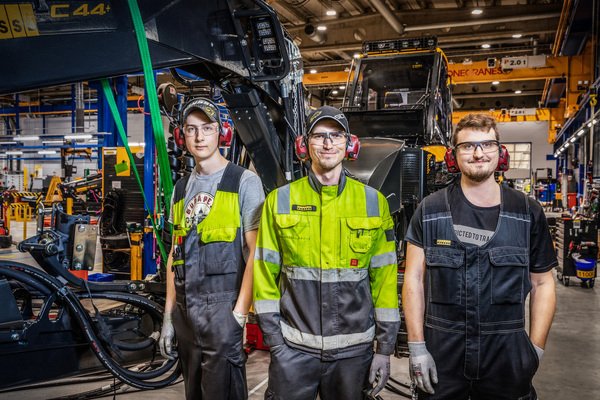
The changing demands of working life are also reflected in education. Students become familiar with production processes, digital systems, and lean thinking, all of which are essential in modern industry. However, Vaarasuo emphasizes that the foundation remains in core professional skills.
“The starting point is vocational competence—manual skills and the use of tools. On that foundation, you can learn anything new,” he stresses.
One of the strongest outcomes of the Ponsse Path is its high employment rate. Students often transition directly into working life, and many are employed by partner companies during their studies or immediately after graduation.
Vaarasuo also highlights that the Ponsse Path does not only develop students, but also teachers and workplace instructors. Learning and regional vitality are supported as knowledge is passed forward, while new insights are continuously created.
“You learn best when you teach someone else. It makes you reflect on and develop your own work,” Vaarasuo concludes.
Text: Creative marketing agency Ida Fram
Photo: Ponsse